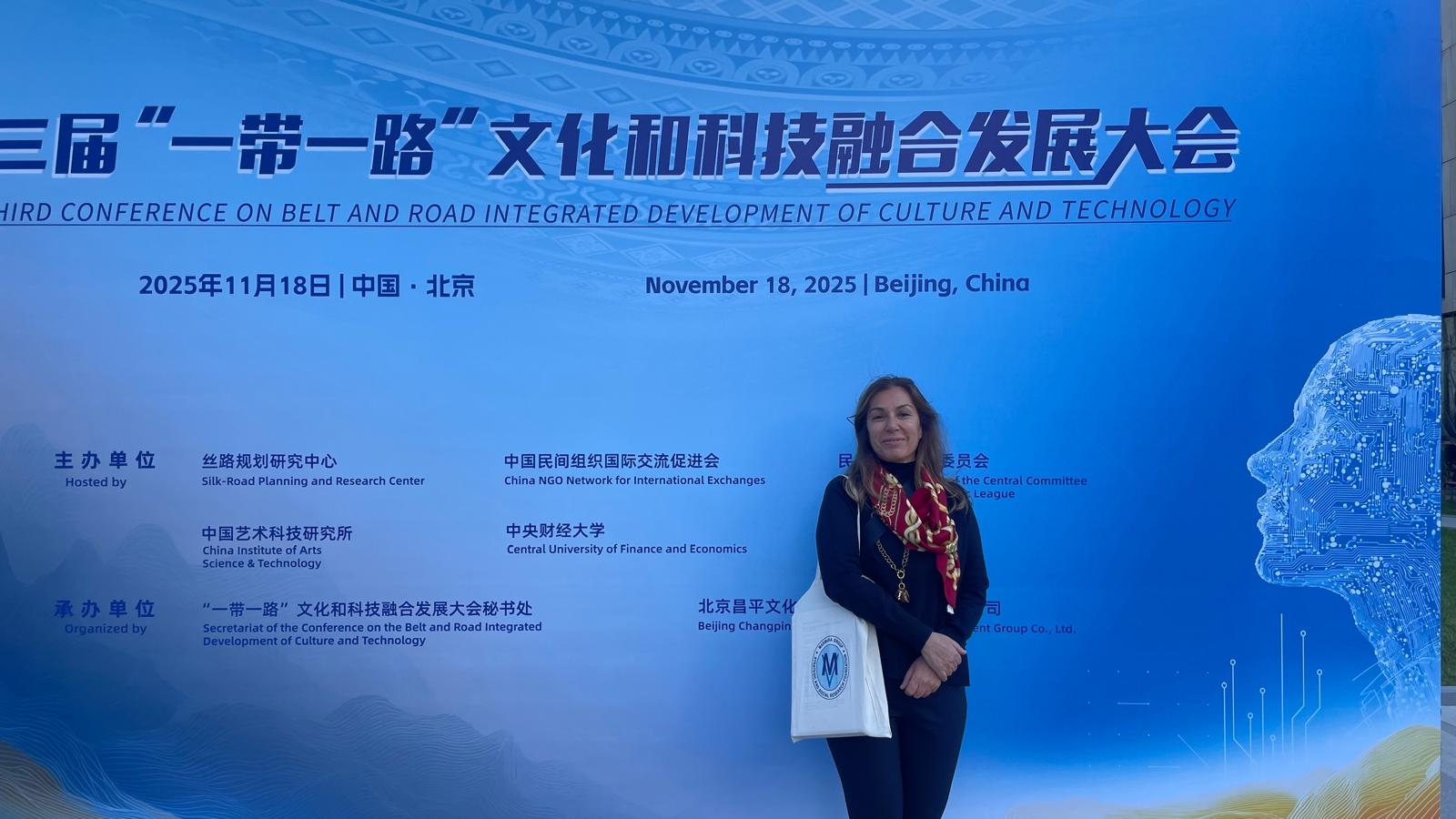


Lale Aytanç Nalbant in Beijing
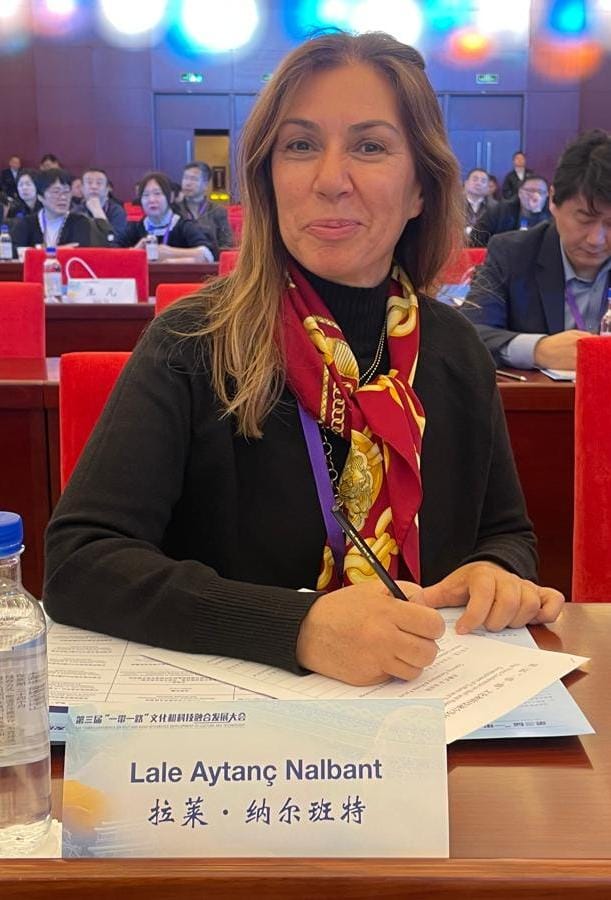
Lale Aytanç Nalbant, Member of the Executive Council of the Marmara Group Foundation, delivered a presentation on Turkey–Belt and Road relations at the International Civil Society Organizations Workshop held in Beijing, representing her civil society identity.
The full text of Lale Aytanç Nalbant’s presentation is as follows:
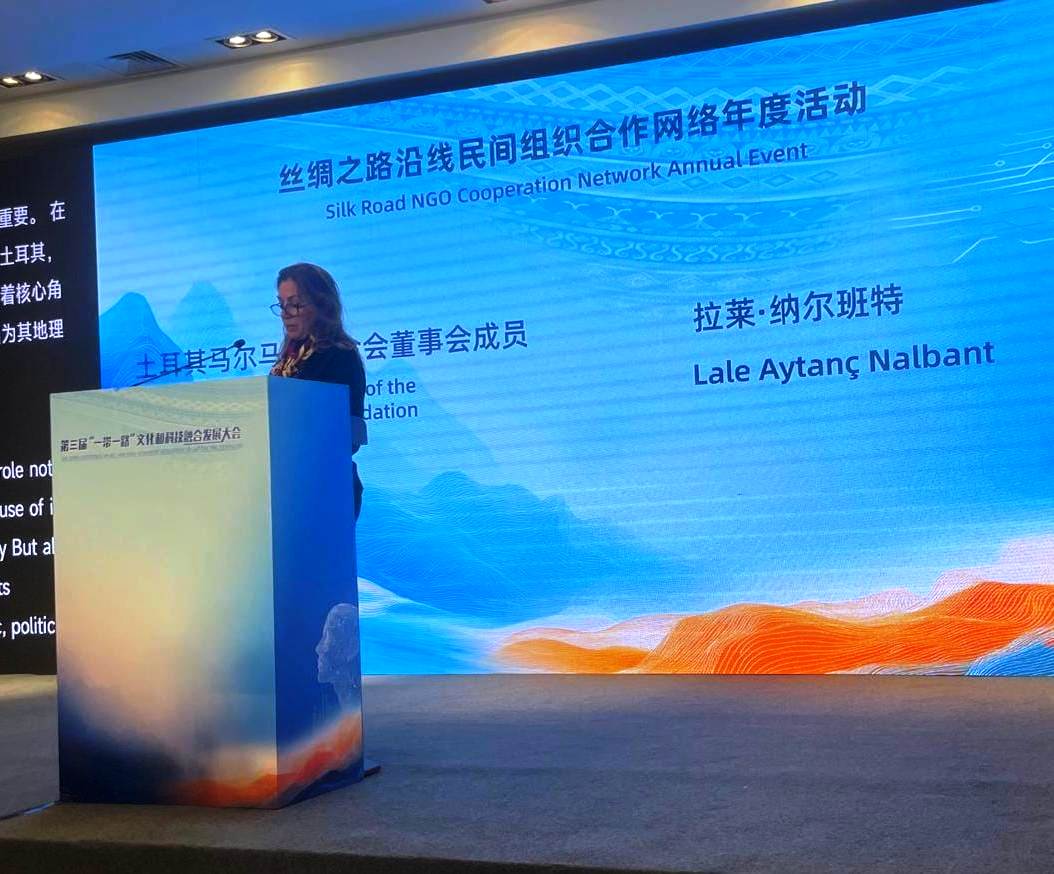
Speech by Lale Aytanç Nalbant
Distinguished members of the assembly,
It is a great pleasure and an honor to greet you from Istanbul on behalf of the Marmara Group Foundation.
I would like to express my gratitude the organizers for hosting this important conference and creating this valuable platform for Exchange and mutual learning.
Today, I would like to share our perspective on the Belt and Road Initiative — a project of great importance to Black Sea area — and its relationship with Türkiye.
Marmara Group Foundation values the Belt and Road Initiative, not only as an economic project, but as a comprehensive platform for scientific, technological, and cultural cooperation among nations.
Türkiye holds a unique position as a bridge between Asia and Europe.
It is part of the China–Central Asia–West Asia Economic Corridor, also known as the Middle Corridor.
This route begins in Xi’an, passes through the Xinjiang Uygur Autonomous Region, Kazakhstan, Uzbekistan, Turkmenistan, Azerbaijan, and Georgia, before reaching Türkiye.
China’s efforts to strengthen its trade ties with Europe, along with challenges in maritime transport, have made this Iron Silk Road — the land route from Beijing to London — increasingly important.
Within this framework, Türkiye plays a central role, not only because of its geography but also through its economic, political, and cultural connections.
Since the independence of the Central Asian Turkic states, Türkiye has worked closely with them to strengthen political and economic ties and to promote the vision of a “Turkic World Corridor.”
Through the Belt and Road Initiative, cooperation among these nations — economic as well as cultural — can grow further.
At the same time, Türkiye gains faster and more cost-effective access to Asian markets.
The Middle Corridor, connecting Western China to Türkiye, stands out as one of the most secure and efficient routes within the Belt and Road network.
To enhance its role, Türkiye has made major infrastructure investments — including the Baku–Tbilisi–Kars Railway, the Marmaray Tunnel, the Eurasia Tunnel, the Yavuz Sultan Selim Bridge, and the Edirne–Kars High-Speed Railway.
These projects strengthen Türkiye’s position as a key transit hub between East and West.
Türkiye and China have also deepened cooperation through bilateral trade agreements and growing investments in energy, infrastructure, automotive, and technology sectors.
While these developments bring short-term economic growth, it is equally important for Türkiye to ensure balanced and sustainable policies that protect domestic industries in the long term.
Among the countries along the Belt and Road route, Türkiye remains the most stable and secure.
Despite regional challenges in Syria, Iraq, and Iran, Türkiye continues to pursue policies that safeguard its borders, promote stability, and contribute to peace — as seen in its constructive roles in regional mediation, including between Azerbaijan and Armenia, and in the Russia–Ukraine conflict.
Enhancing political, social, and cultural ties between Türkiye and China is essential for the healthy progress of this initiative.
Türkiye’s active engagement in the Belt and Road increases its international visibility and reinforces its geopolitical and strategic importance.
Through this cooperation, we can bring the Turkic world closer together and build a new framework for Asia-centered partnership and prosperity.
Thank you for your attention.
It has been an honor to address this distinguished gathering.