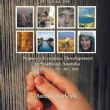
A cooperation protocol was signed between the GAP Regional Development Administration and the Marmara Group Foundation for a workshop titled "Strategies for the Economic Development of Women in Southeastern Anatolia." With UNDP also a party to this protocol, the aim was to present strategies to strengthen women's participation in economic life and regional development in the GAP region, to generate solution-oriented ideas regarding financing, production, and marketing cycles in women's economic activities, and to create strategies for developing women's entrepreneurship and employment, thereby providing a roadmap.
In line with this purpose, a workshop was held in Mardin on September 29-30, 2005, targeting women producers and entrepreneurs active in the GAP region, public institution employees working on women's issues, representatives from local and foreign private sectors, non-governmental organizations, chambers of commerce and industry, and local and foreign research institutions.
The workshop, attended by 250 guests from various segments of society, included the following presentations:
·Ms. Nazik Işık from the Home-Based Working Women Group and Local Politics Working Group / Kader, on product selection, production quality, design, continuity in production, and organization;
·Assoc. Prof. Dr. Şemsa Ozar from Boğaziçi University Department of Economics, on financing sources, microcredit, and capital cycle;
·Prof. Dr. Yıldız Ecevit from METU Department of Sociology, on women's employment, entrepreneurship, and job creation in the production/marketing process;
·Müjgan Suver from the Marmara Group Foundation, on the role of local actors in women's economic development.
At the end of the workshop;
·Concepts and approaches regarding women's economic development were discussed.
·The production-marketing process was examined, obstacles encountered within this process were addressed, and solutions were proposed.
·Strategies were developed to strengthen women's participation in economic life and to promote entrepreneurship.
·Projects aimed at women's economic development carried out by the GAP Administration, as well as women's programs and projects of other national/international public, private, and civil society organizations, were introduced.
·Efforts were made to develop cooperation and communication networks on organization, education, marketing, design, production, and project development related to women's development in GAP.
·A booklet titled "Strategies for the Economic Development of Women in Southeastern Anatolia" was prepared.